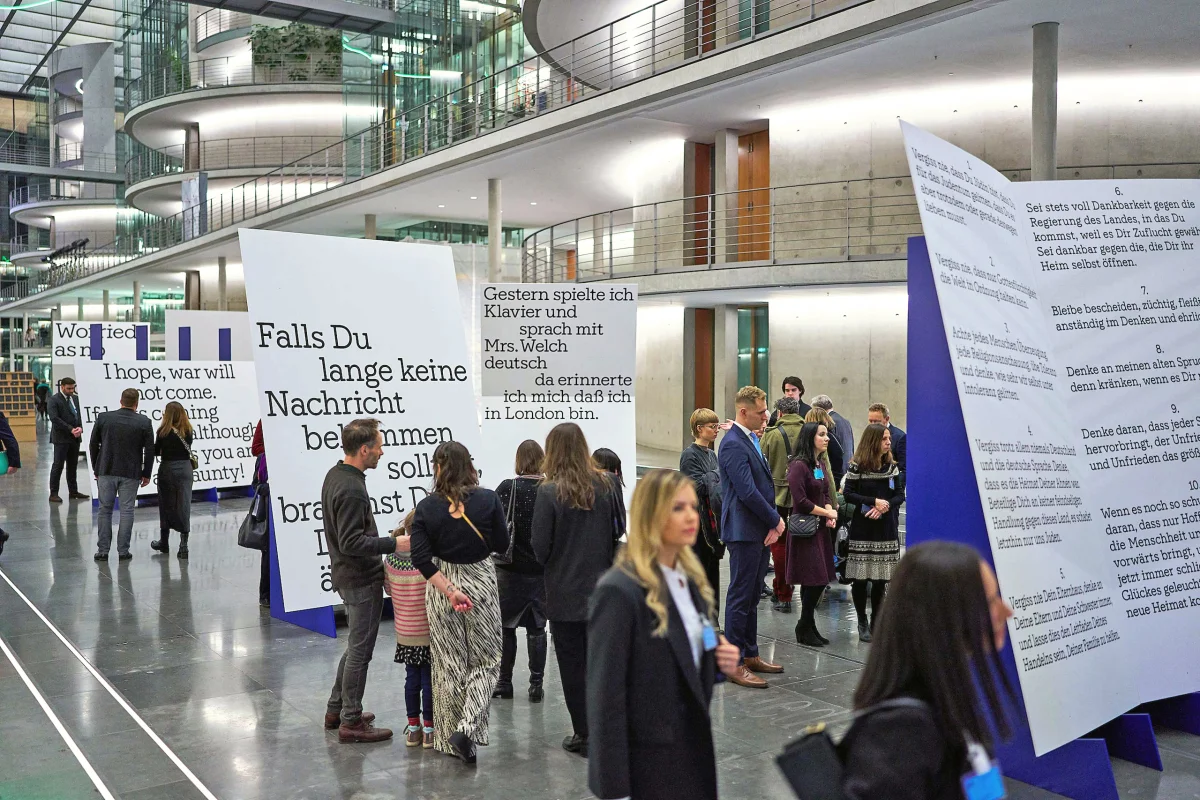
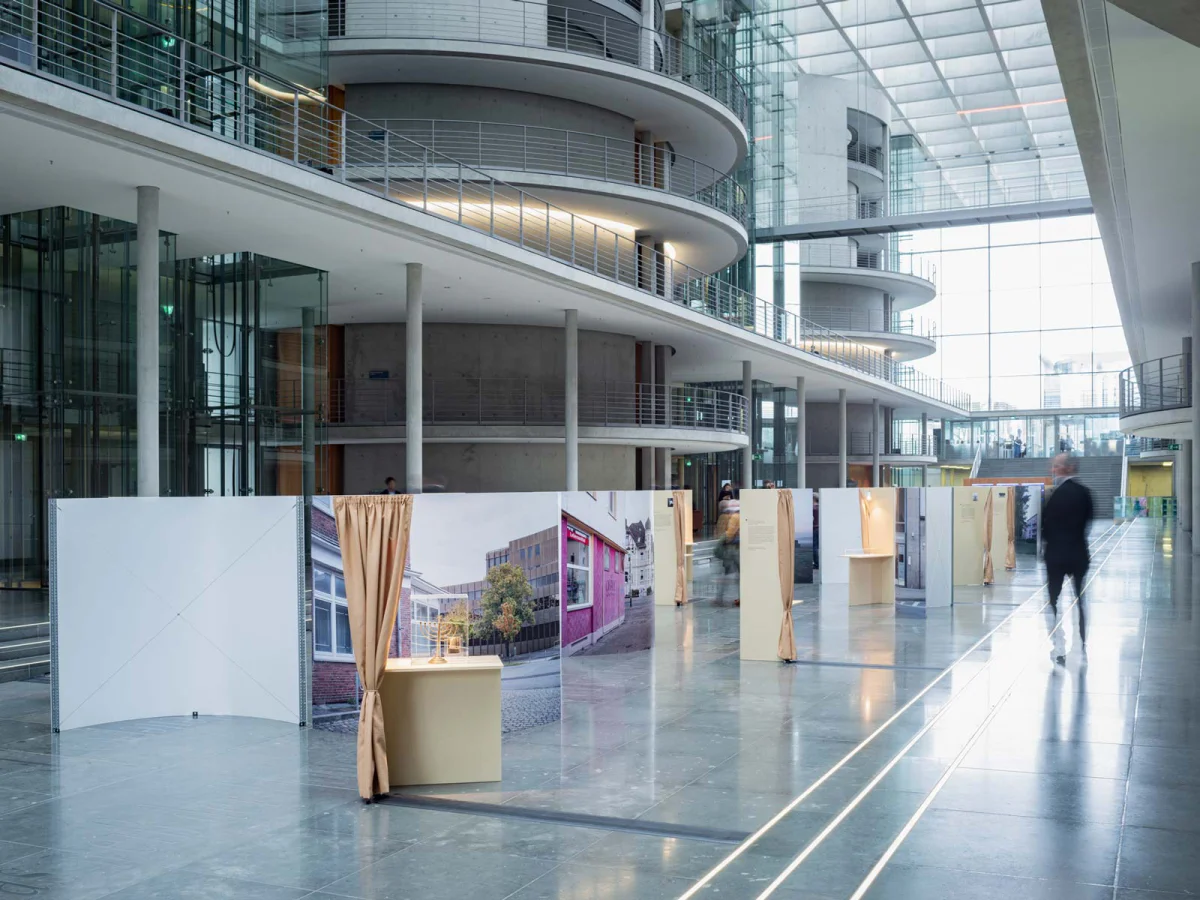
White Kindertransport exhibition panels in a bright atrium, with a central English quotation hoping war will not come.
Portrait-format view of the Kindertransport exhibition, with letter quotations, blue benches and curved gallery railings.

I said ‘Auf Wiedersehen’

How can personal stories speak to a wider history?

Context

In 1938 and 1939, more than 10,000 predominantly Jewish children escaped Nazi persecution through the Kindertransport to Great Britain, while most of their parents remained behind. Marking its 85th anniversary, the exhibition tells this history through letters and postcards from five families, revealing experiences of separation, uncertainty, and the hope of reunion.

Approach

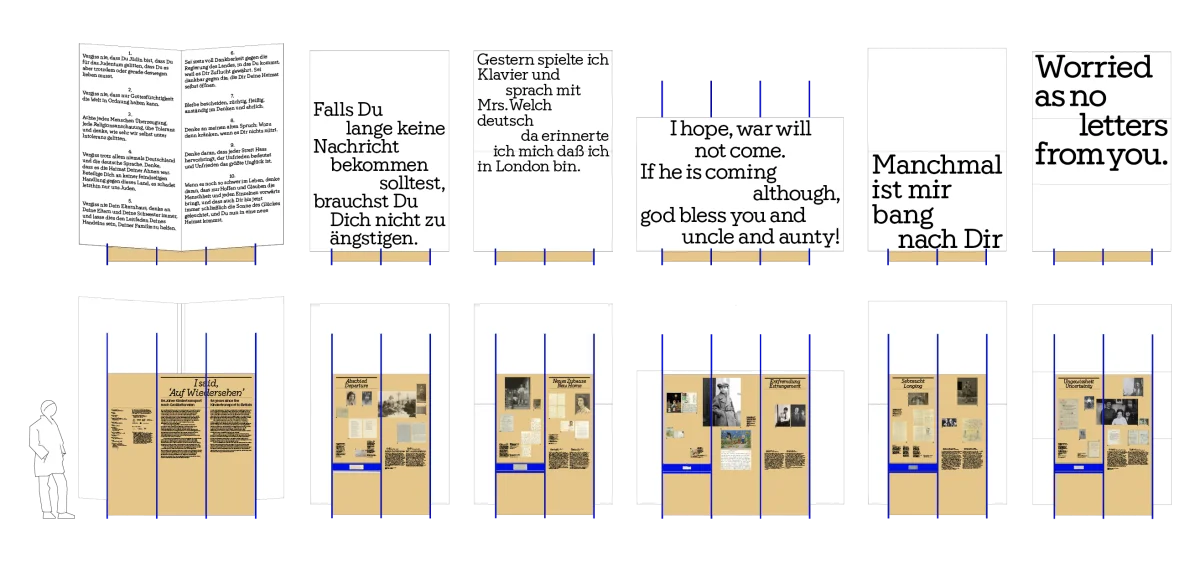
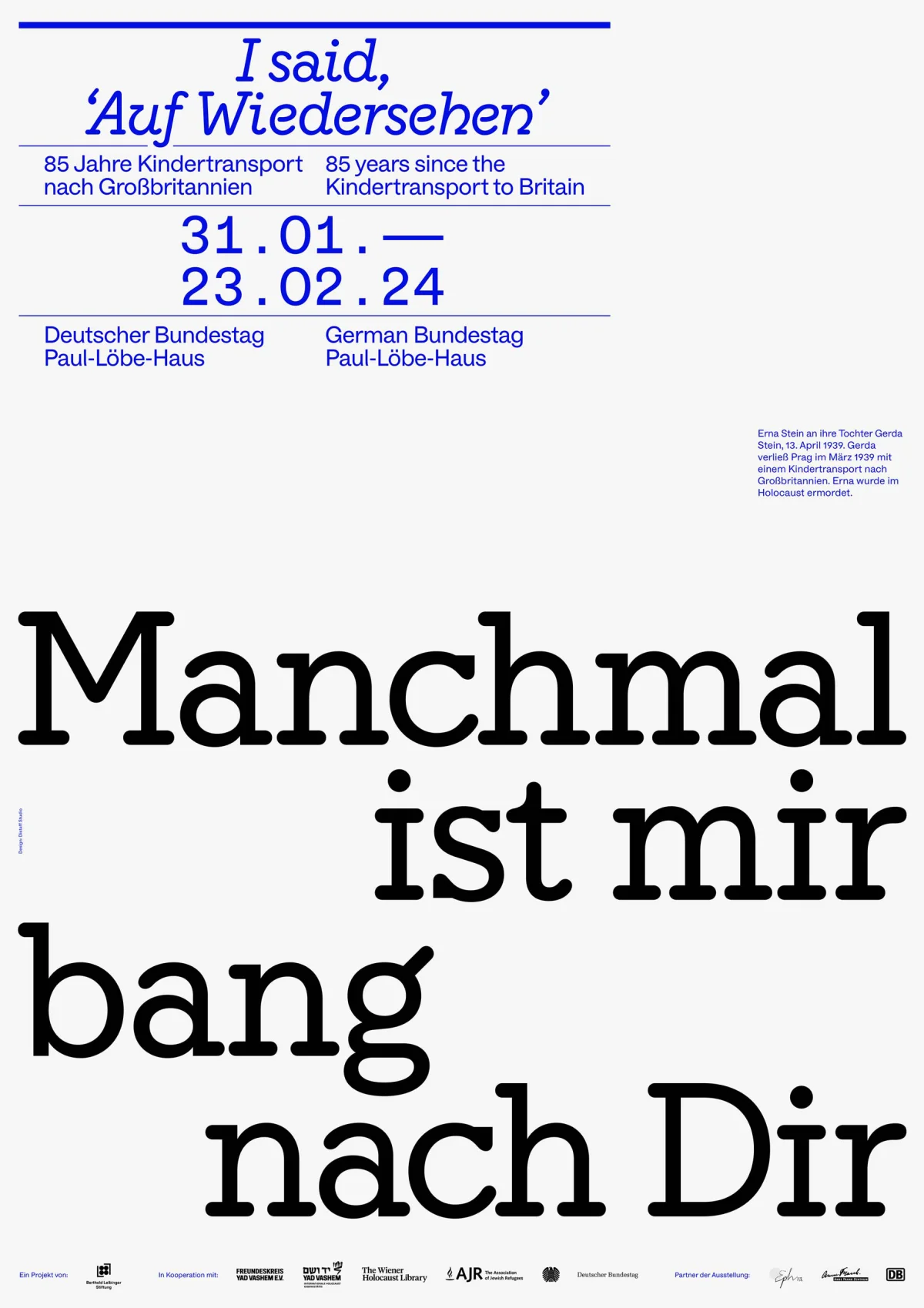
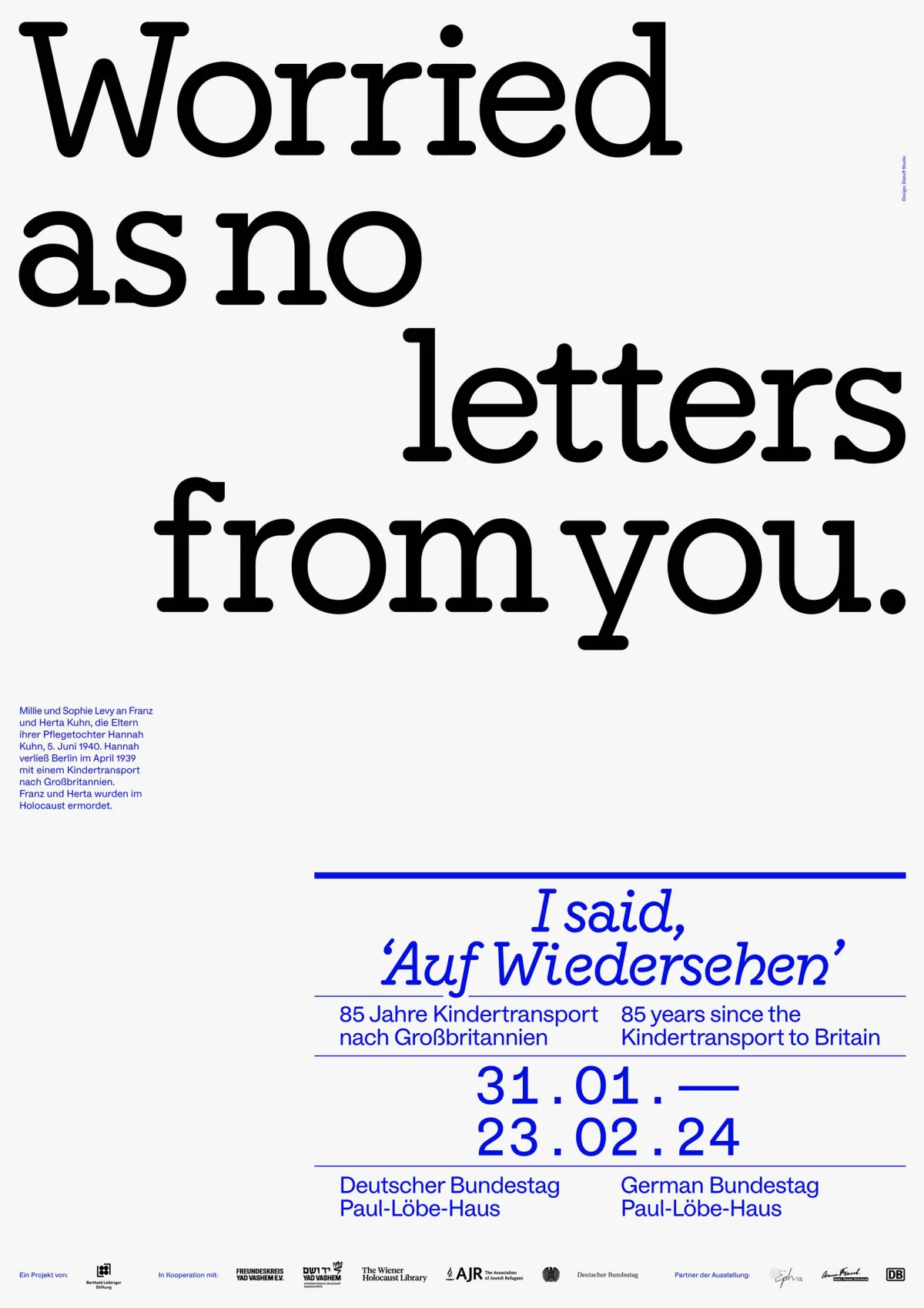
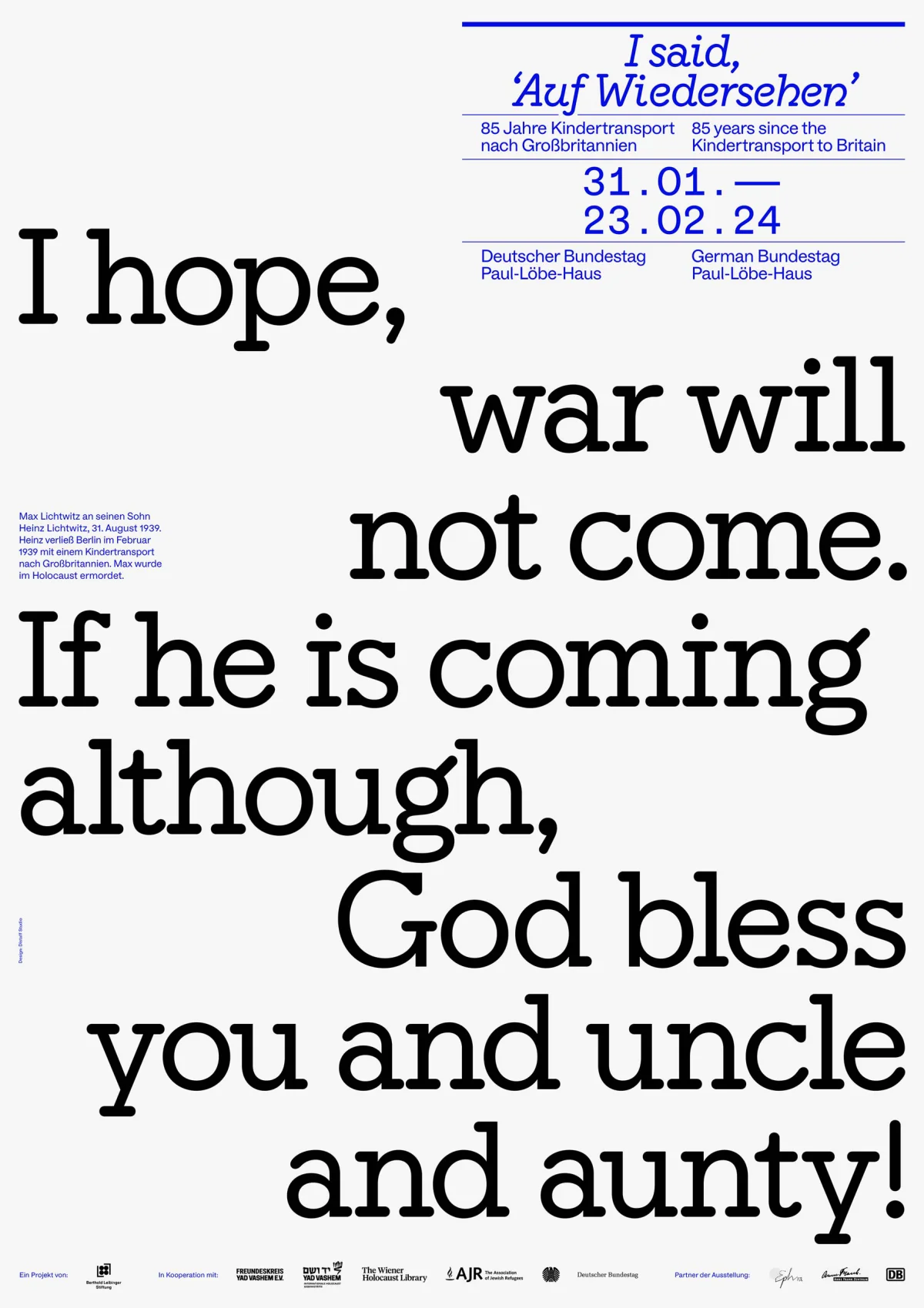
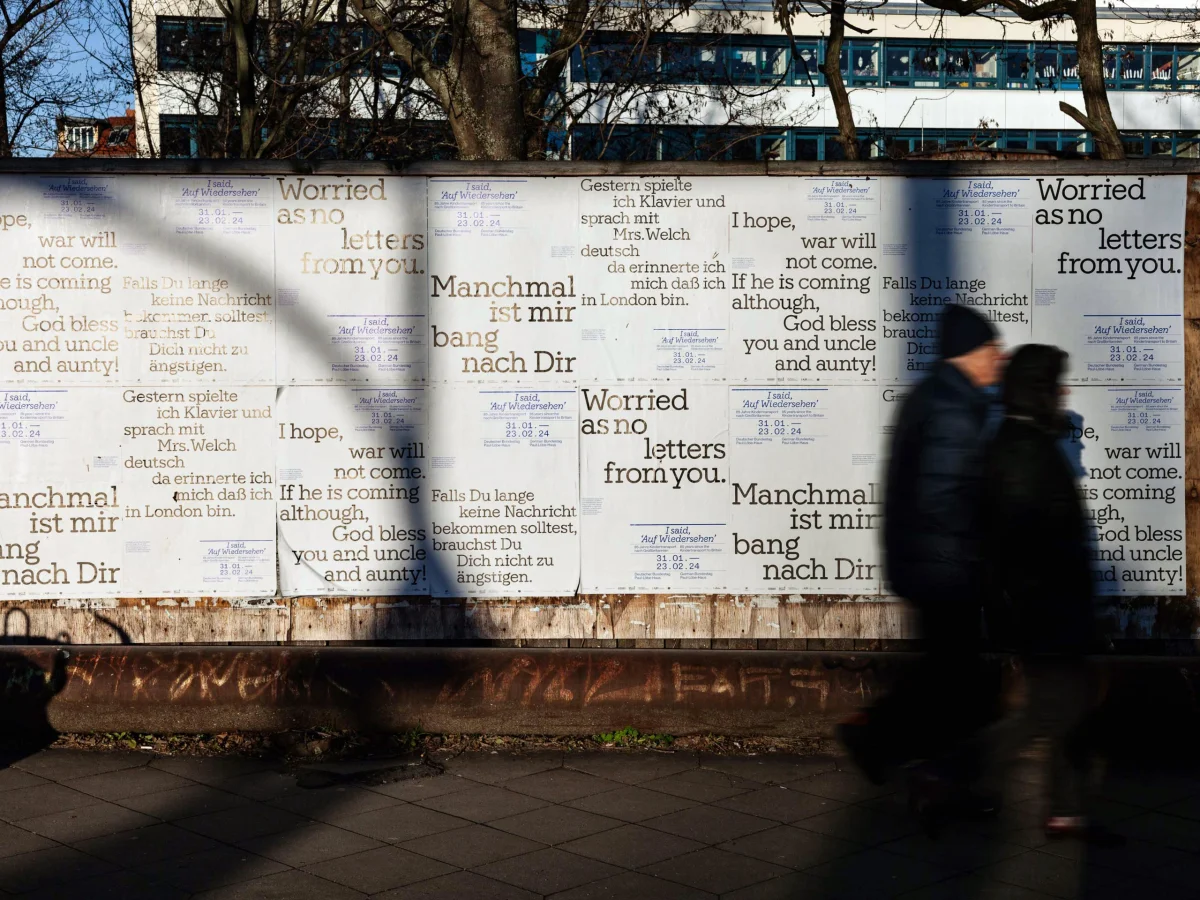
Historical narratives often create distance. The graphic approach draws individual sentences from the families’ correspondence and shifts them from the intimacy of a letter into public space. Enlarged to become voices within the exhibition and across Berlin, the quotations are encountered without immediately revealing their historical context. Their expressions of worry, hope, and separation can first be read through the present, resonating with contemporary experiences of displacement and forced migration. Only then does their origin become apparent, bringing past and present into dialogue rather than keeping history at a distance.

Project documentation
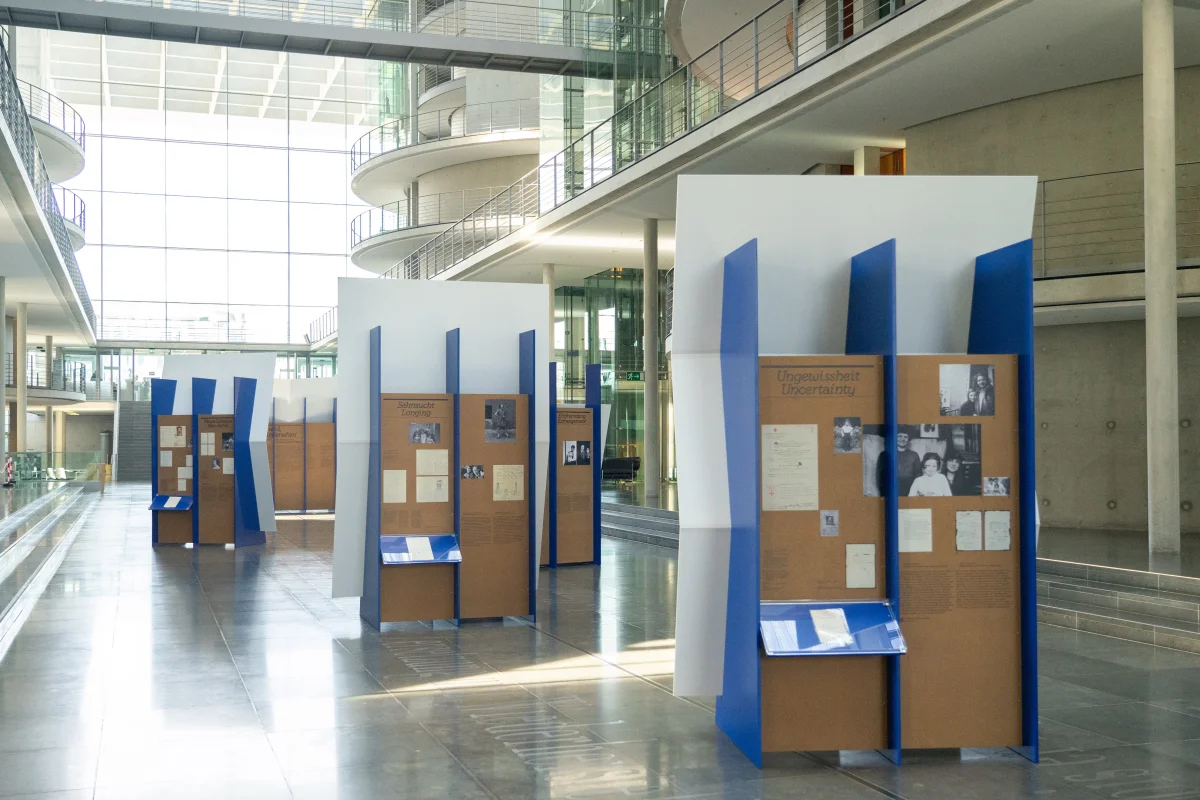
Blue exhibition modules in an atrium, with brown reverse panels presenting Kindertransport letters, photographs and information.
Design overview of exhibition modules, with large letter quotations on white fronts and documents on brown reverse panels.
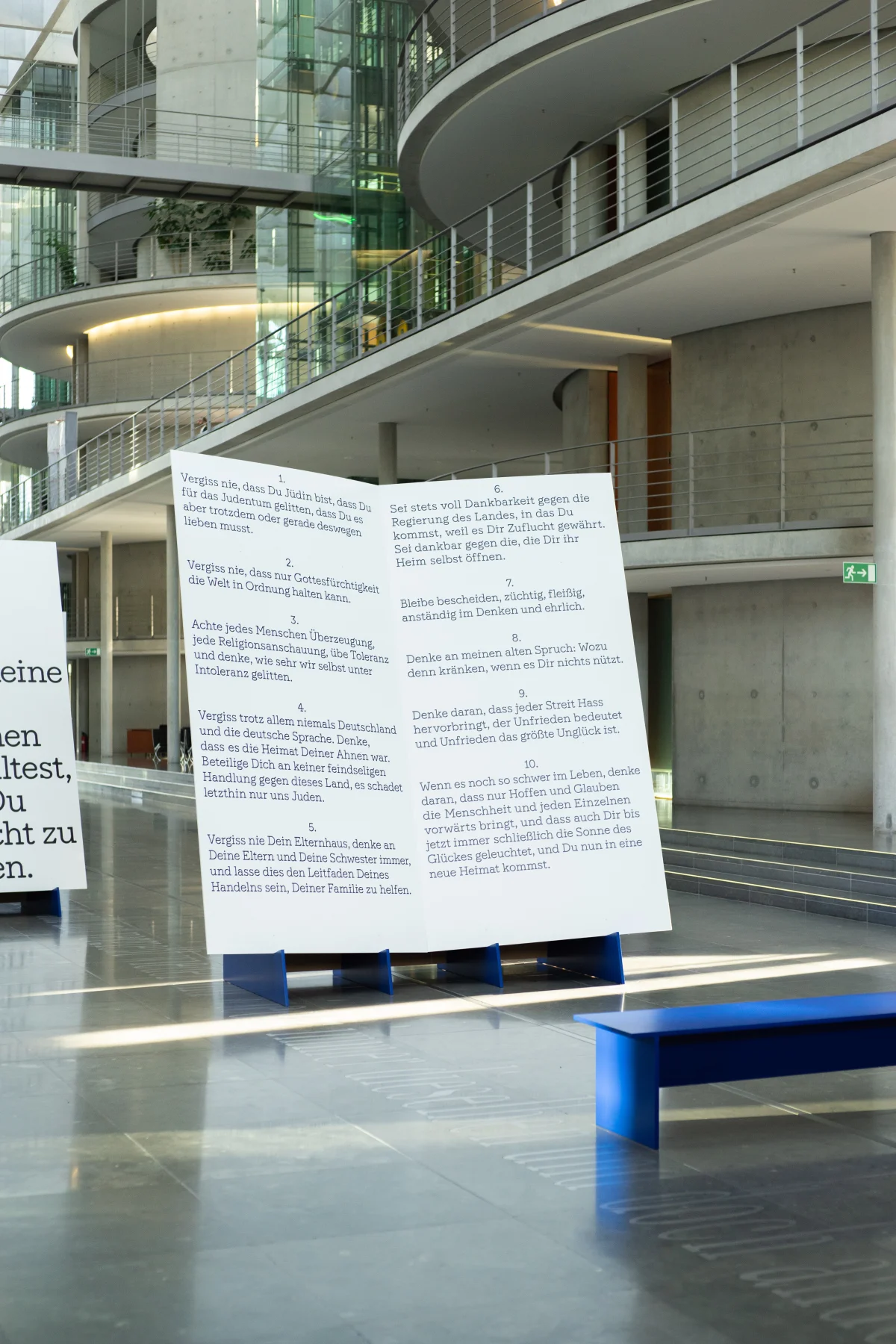
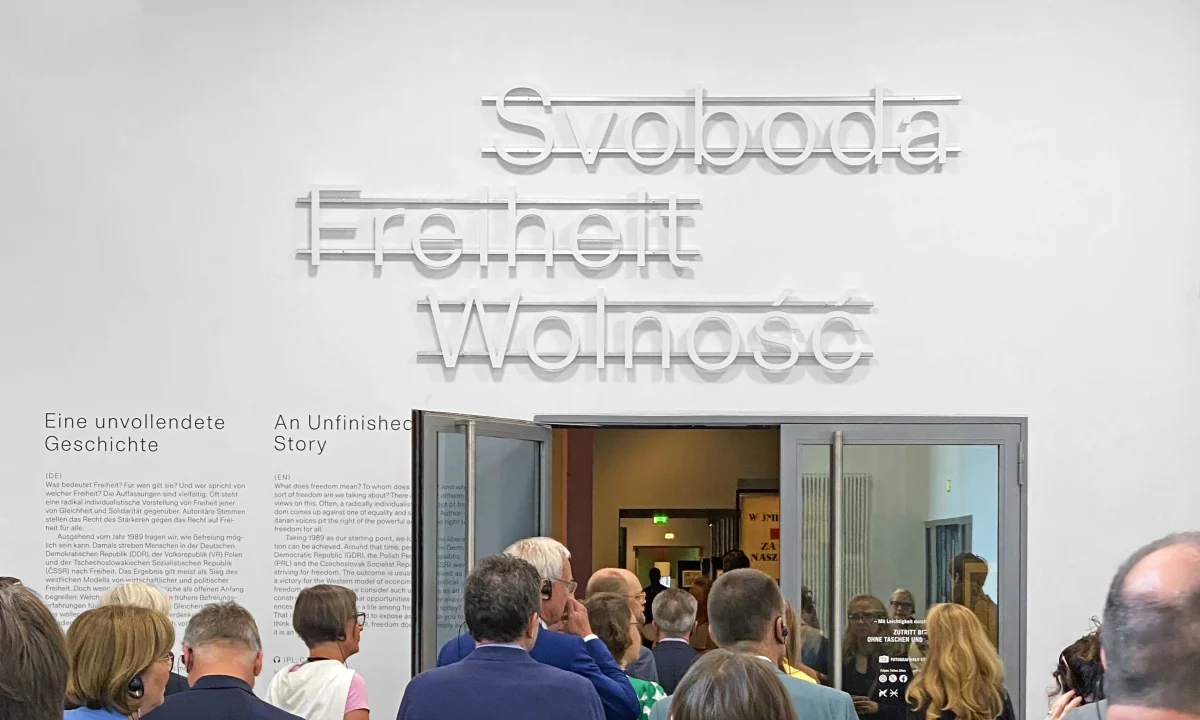
Freestanding white exhibition module with a bilingual introduction in an atrium, with a blue bench in front.
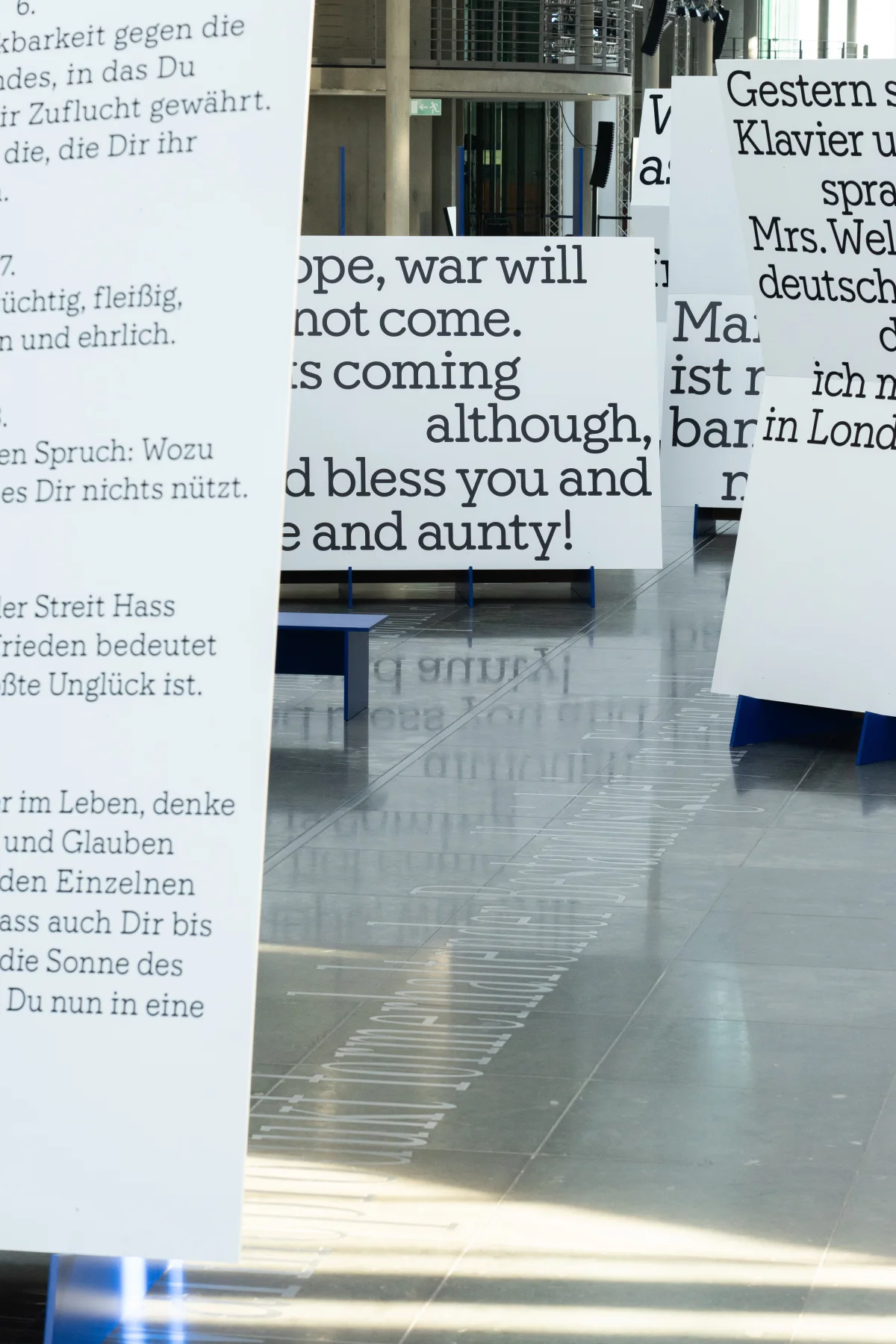
View between white exhibition panels carrying oversized German and English letter quotations.
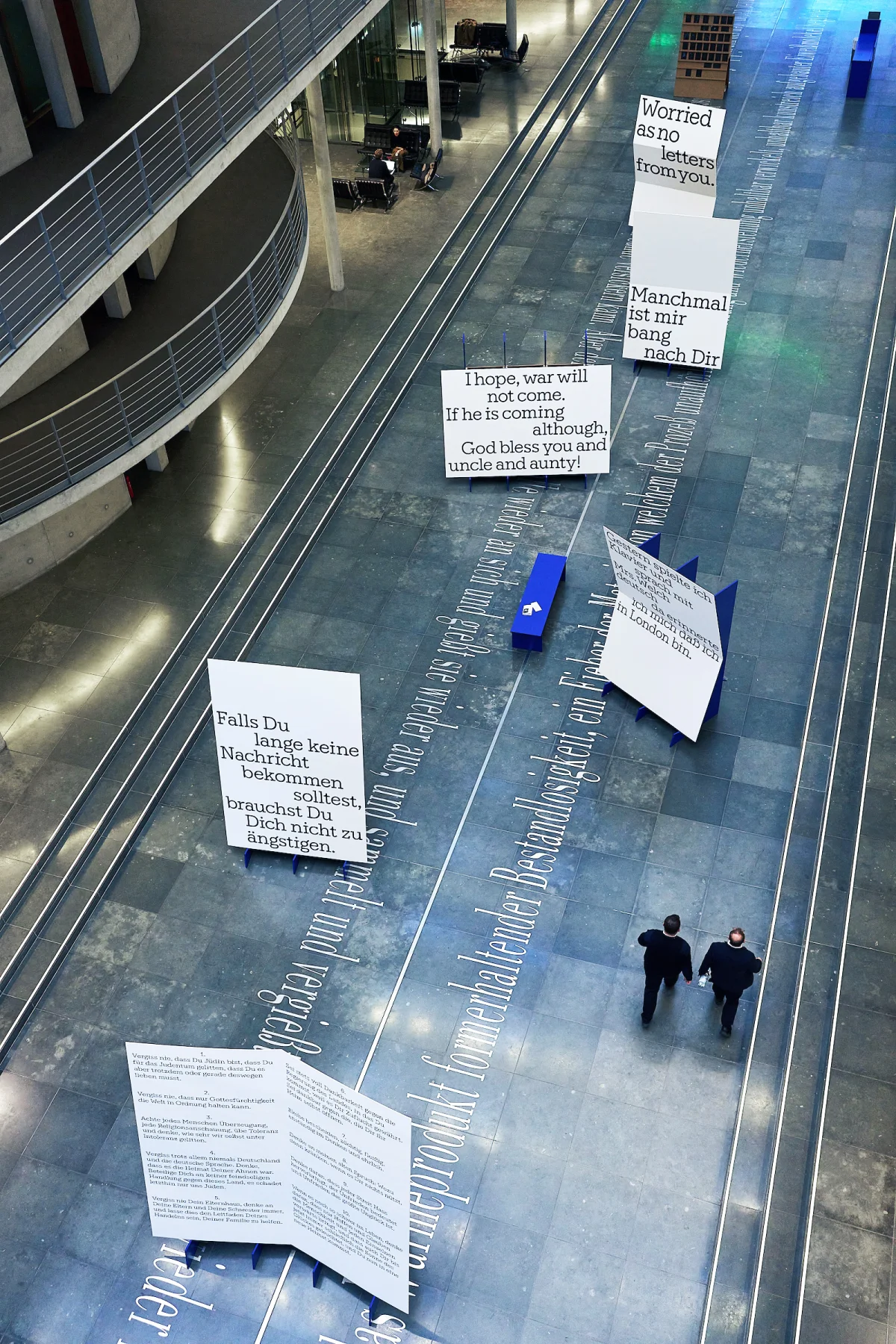
Overhead view of the Kindertransport exhibition, with white text panels, blue benches and visitors.
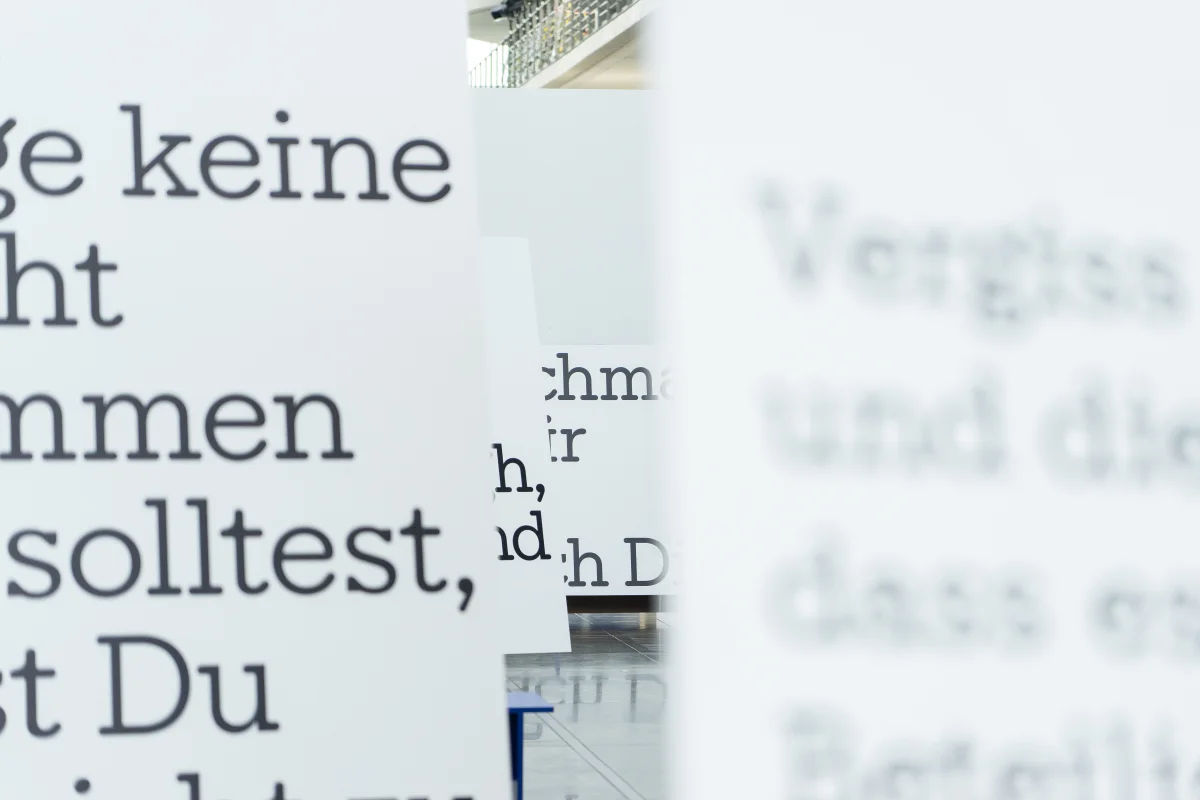
Close-up of black letter quotations on staggered white exhibition panels, with blurred foreground and background.
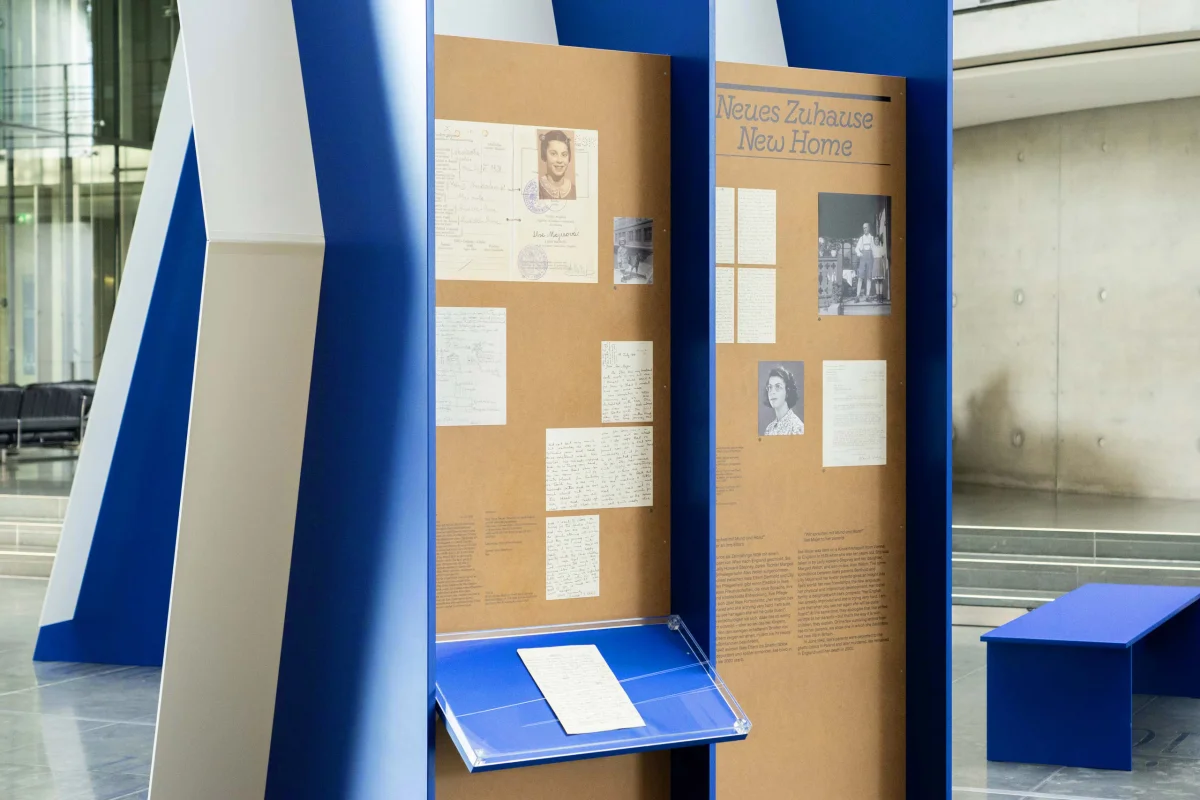
Blue exhibition modules with historical documents and photographs; one panel is headed “Neues Zuhause / New Home”.
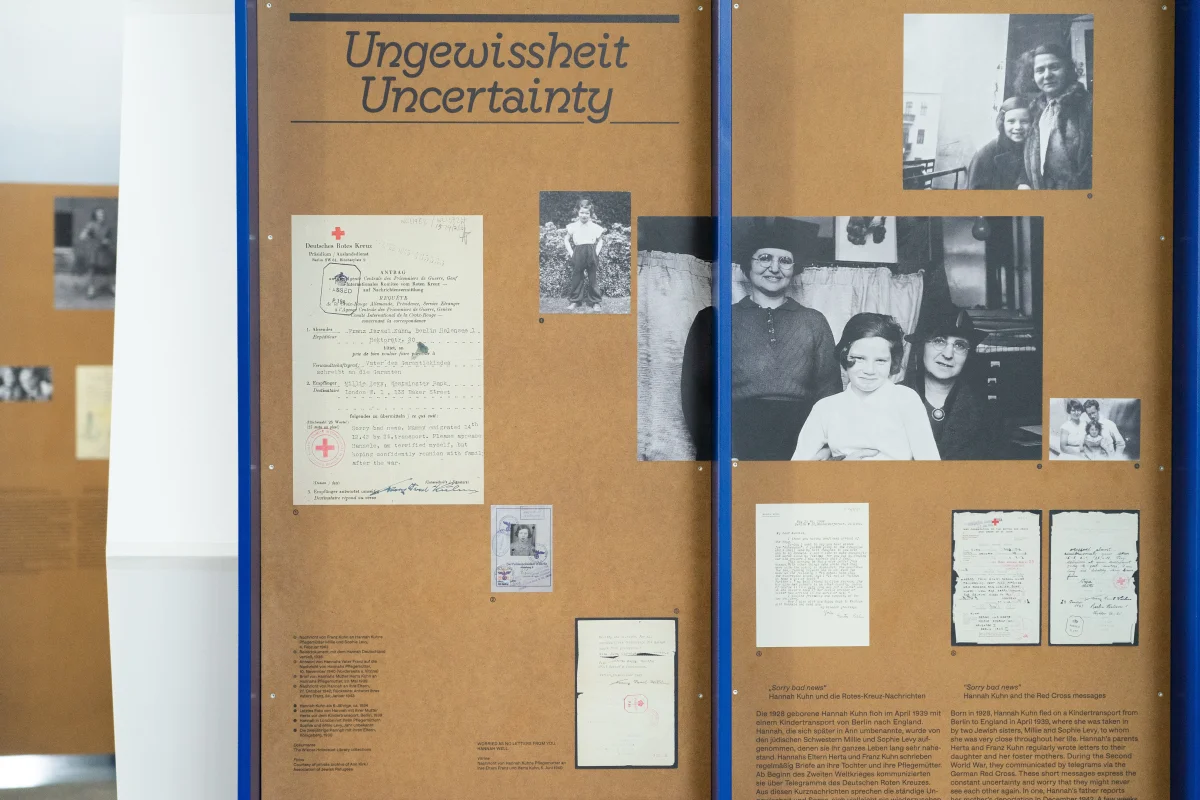
Brown exhibition panel headed “Ungewissheit / Uncertainty”, with letters, forms and historical family photographs.
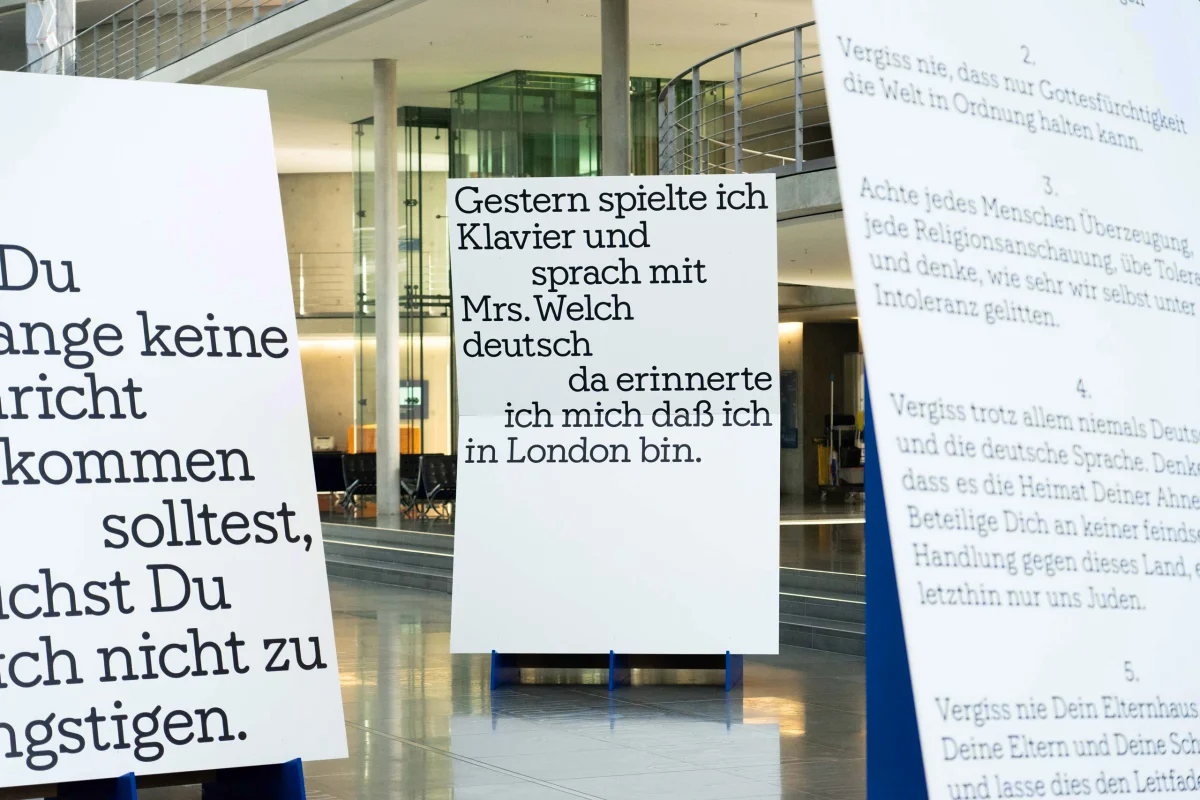
White exhibition panels with large letter quotations, including a German passage about playing piano and speaking German with Mrs. Welch.
Visitors among tall white text panels at the Kindertransport exhibition in an atrium.
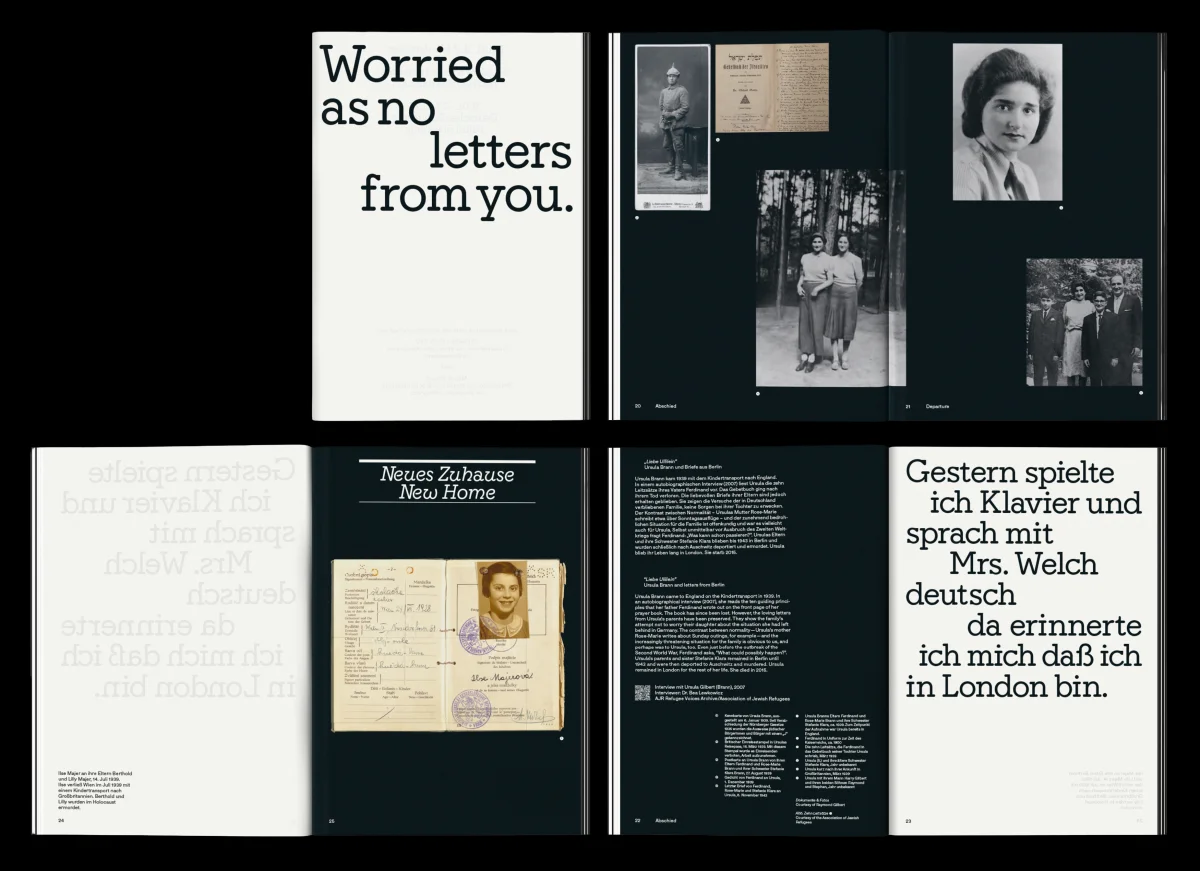
Several spreads from the exhibition booklet, combining large letter quotations, historical portraits and documents on dark backgrounds.
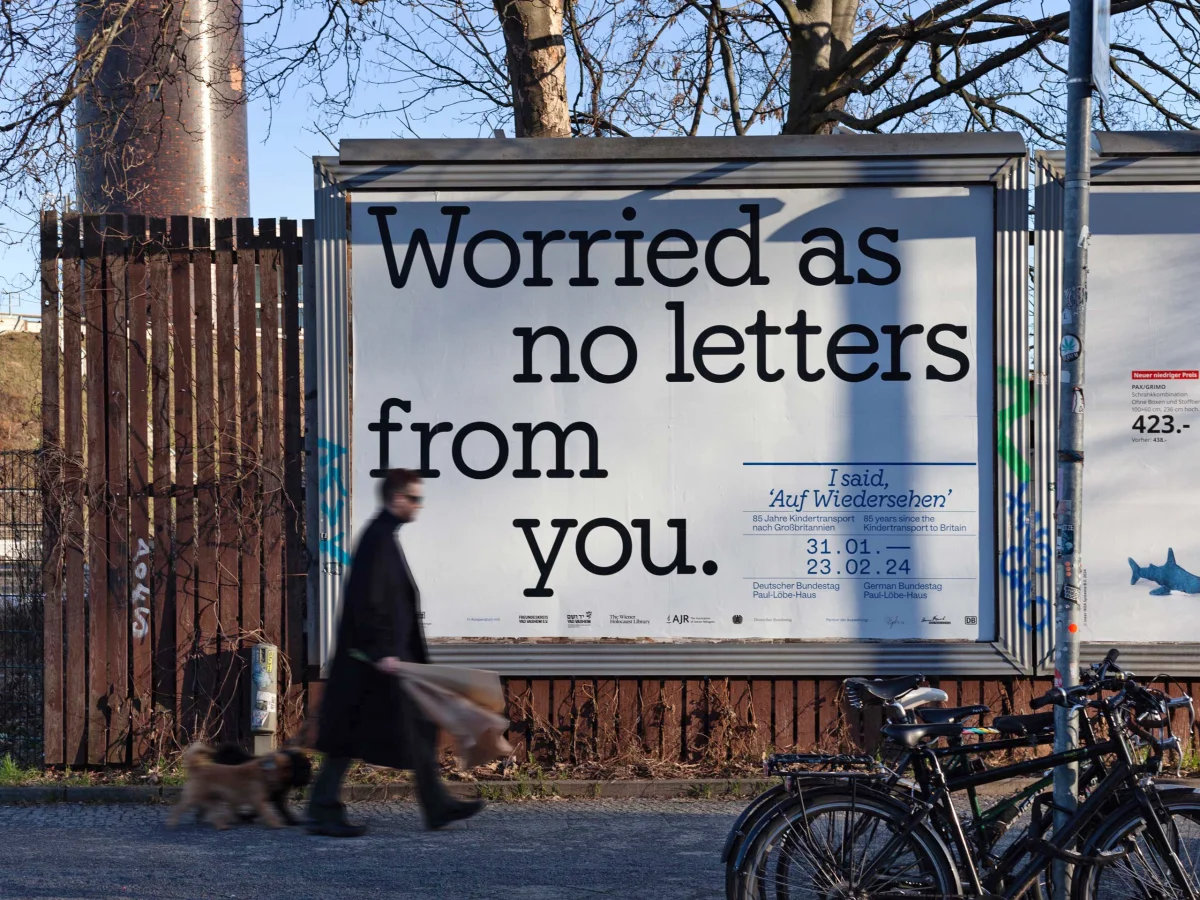
Street-mounted poster reading “Worried as no letters from you.”, with a passer-by and parked bicycles in front.
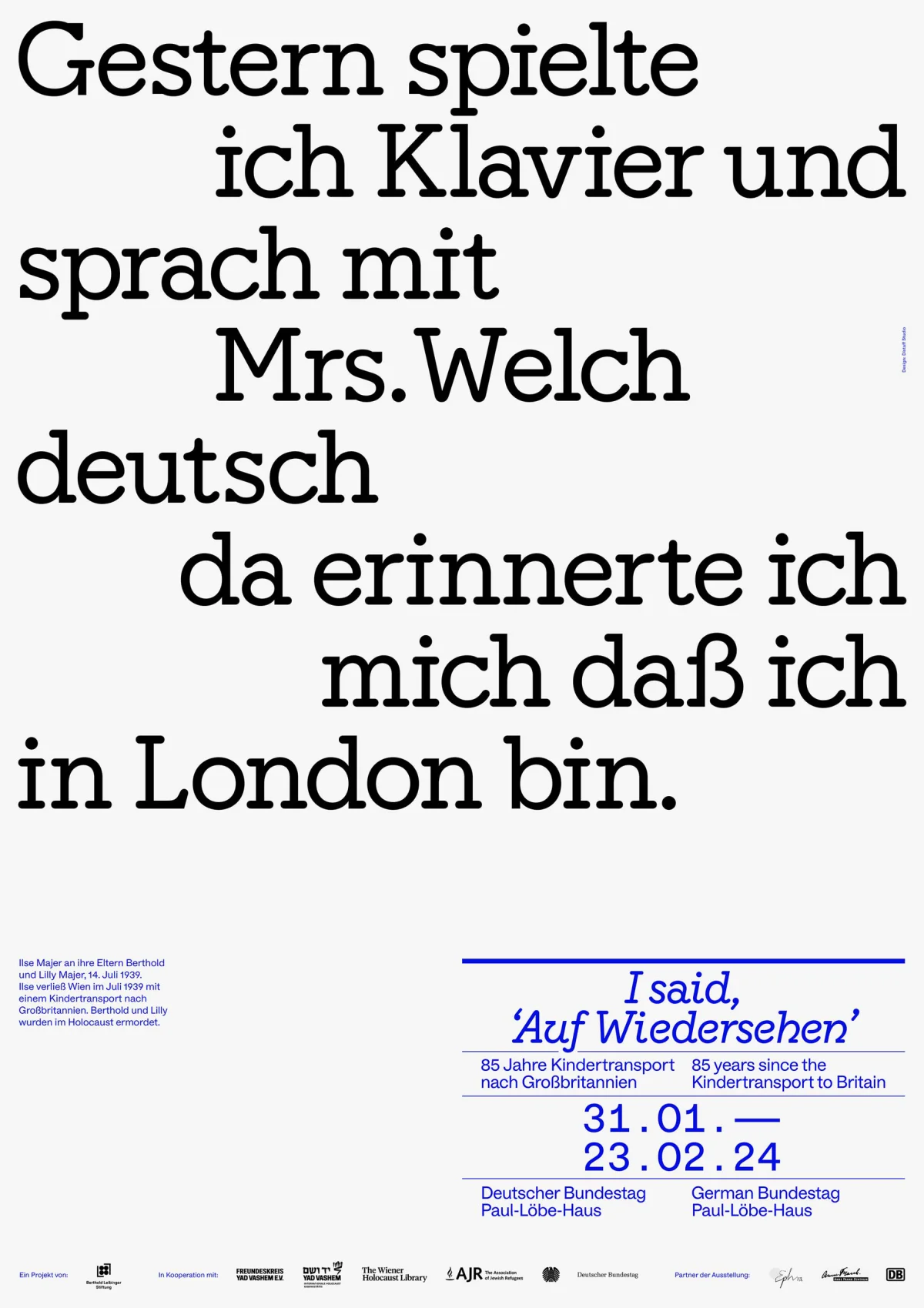
White exhibition poster with a German letter quotation about playing piano, Mrs. Welch and remembering being in London.
White “I said ‘Auf Wiedersehen’” poster with a large German letter quotation meaning “Sometimes I ache for you.”
White exhibition poster with the large English letter quotation “Worried as no letters from you.”
White exhibition poster with the letter quotation “I hope, war will not come. If he is coming although, God bless you and uncle and aunty!”
Wall covered with closely arranged exhibition posters and large letter quotations, with a person walking past.

Project

Project Title
I said ‘Auf Wiedersehen’
Client
Friends of Yad Vashem Germany / Berthold Leibinger Foundation
Year
2024
Services
Exhibition Graphics, Campaign Design, Editorial Design
Role
Concept Development, Art Direction, Design, Project Lead, Production Coordination
Curation
Ruth Ur
Graphic Design
Sarah Fricke, Lea Sievertsen, Pawel Wolowitsch (Distaff Studio)
Exhibition Architecture
Kooperative für Darstellungspolitik
Location
Paul-Löbe-Haus, Deutscher Bundestag, Berlin
Image Credits
Gregor Matthias Zielke (Opening), art/beats (Exhibition Views)
Typefaces
Repost and Four Grotesk by HAL Typefaces